
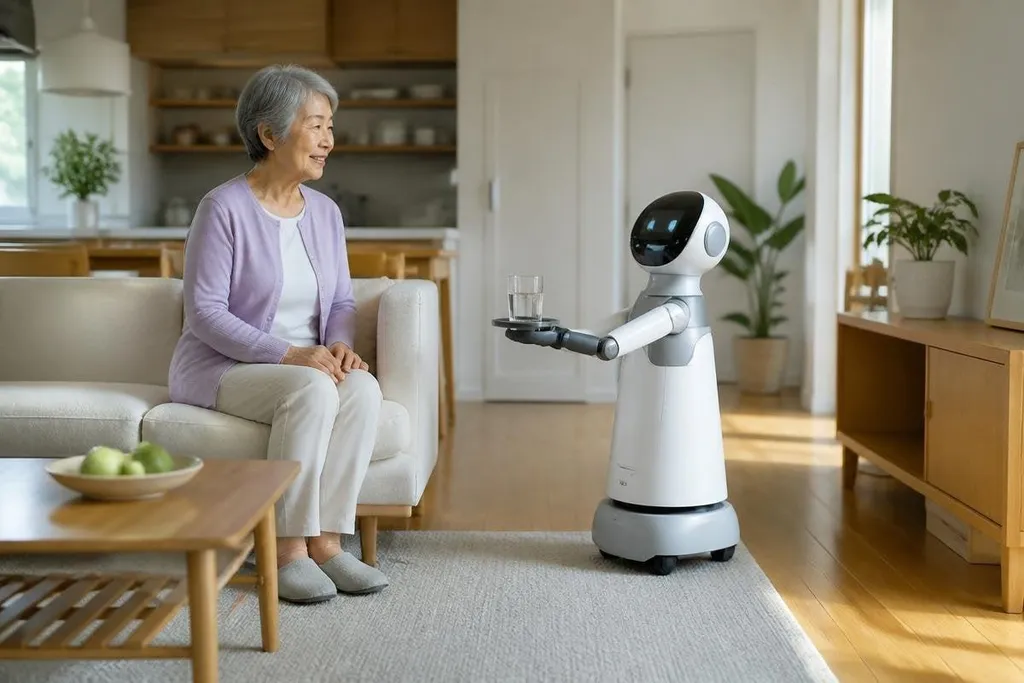
A companion robot has to do more than speak on command. It must hear you, move safely around furniture, protect private data, and keep working after the first week. The biggest advances to watch are the ones that improve those daily tasks.
- Better memory could make conversations less repetitive.
- Safer movement matters more than a human-shaped body.
- Clear limits on data use will shape trust at home.
Memory that helps without guessing
A useful companion robot should remember facts you choose to share, such as your preferred wake-up time or the name of a medicine. That memory needs controls so you can view, correct, or delete each item.
The hard part is knowing when a detail is useful. A robot that stores every sentence creates a privacy problem and may repeat old information at the wrong time. A better system would separate short-term context from saved details, then ask before keeping something new.
A good test is easy to state: ask the robot to remember one harmless fact, correct it later, and remove it. The system should show what it stored and confirm the change in plain language. If it cannot do that, its memory is a feature to watch, not a reason to buy.
Movement that fits a real home
Many homes have narrow paths, loose cables, pets, stairs, and furniture that moves. A companion robot needs sensors that detect these changes, then a plan for stopping when the path is unclear.
Safe movement also means low speed near people, a reachable stop control, and a clear response after contact with an object. A robot that can cross a room but cannot handle a dropped bag still leaves the hard work to you.
A companion robot should stop after a blocked path, explain the problem, and ask for help rather than repeat the same motion. That recovery step leads into voice, screens, and hands working together, where Robot 24 can help you compare a product claim with the behavior shown in testing.
Voice, screens, and hands working together
Speech is useful when your hands are full, but it breaks down in a noisy room. A companion robot needs another way to show what it heard and what it plans to do.
A screen, light, or simple arm motion can confirm the next step. The robot might display a timer, show the name it heard, or ask you to choose between two actions. That reduces errors without forcing you to repeat the same command.
The better systems will also handle interruptions. You should be able to pause a task, change the request, and see whether the robot accepted the new instruction. This is a small detail, but it decides whether the robot fits a kitchen or becomes another device that needs supervision.
Privacy that you can check
Companion robots may use microphones, cameras, cloud services, or local computing. Each choice affects what leaves the home and what happens when the internet connection fails.
Look for a physical microphone mute, a visible camera status, local controls, and a clear record of stored data. Claims about privacy mean little without those controls. The maker should also state how long recordings remain available and which functions stop when the network is down.
I’d skip any companion robot that hides these answers behind a vague privacy page. A warm voice cannot make unclear data handling acceptable.
A buyer’s check before the next advance
Use this short list when a product announcement sounds ready for the living room:
- Task proof: Ask for an uncut video of the robot completing the stated task.
- Failure plan: Check what it does after a blocked path, missed command, or lost connection.
- Control: Find the physical stop, mute, camera, and data-delete controls before purchase.
- Cost: Separate the robot price from any monthly cloud or voice service fee.
- Support: Confirm the warranty period, software update policy, and repair route.
The next worthwhile companion robot won't be the one with the most human-like face. It will be the one that remembers only what you allow, stops before causing trouble, and tells you when it cannot finish a task.